In today’s digital age, technology no longer exists as isolated devices. Instead, it operates within tightly connected environments known as tech ecosystems—systems that promise convenience, efficiency, and seamless integration. But behind that comfort lies a growing question: Are users gaining freedom, or quietly giving it up?
What Is a Tech Ecosystem?
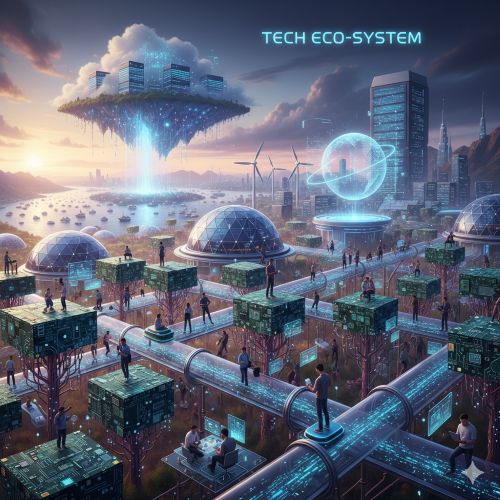
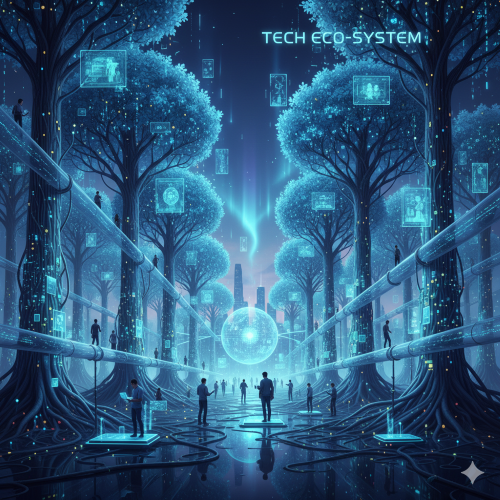
The term ecosystem originates from biology, where it describes how living organisms coexist and depend on one another within an environment. In technology, the meaning is similar—except the players are devices, software, and companies.
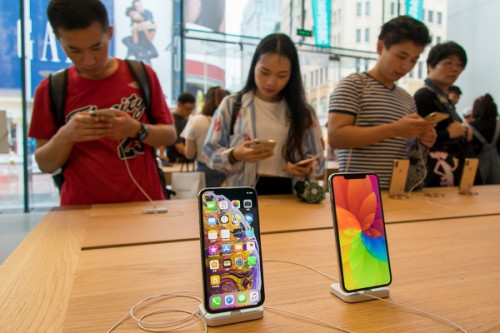
A Tech Ecosystem refers to a collection of devices and services produced by a single company—such as smartphones, smartwatches, earbuds, tablets, and laptops—that work together seamlessly. Brands like Apple, Samsung, and Google have built ecosystems where devices automatically sync data, share files, and communicate without user intervention.
Take a photo on your phone, and it appears instantly on your tablet. Answer calls on your smartwatch. Switch audio between devices effortlessly. This frictionless experience has become a defining feature of modern digital life.
Convenience Comes at a Cost
There is little debate that tech ecosystems deliver exceptional user convenience. Everything works smoothly, often faster and more reliably than mixed-brand setups.
However, critics argue that this convenience comes with hidden trade-offs.
At their core, ecosystems function as “walled gardens”—closed systems designed to keep users within a single brand’s universe. Once inside, leaving becomes increasingly difficult.
The Illusion of Choice
While ecosystems appear flexible, they often restrict genuine choice. An iPhone works best with an Apple Watch. Use a different smartwatch, and key features disappear. The same pattern exists across platforms.
What feels like optimization is, in practice, controlled compatibility—a subtle way of limiting alternatives without explicitly banning them.
The Lock-In Effect
This strategy is known in business terms as the lock-in effect.
After purchasing one device, users are encouraged—sometimes unintentionally—to buy complementary products from the same brand. Over time, switching to another ecosystem becomes costly, not just financially but psychologically. Few users are willing to abandon devices they have already invested in.
As a result, ecosystems don’t just sell products; they secure long-term customers.
Digital Tribalism on the Rise
Beyond economics, tech ecosystems are reshaping social behavior.
In some countries, messaging platforms reveal device types through visual cues—blue bubbles versus green bubbles—creating subtle forms of social exclusion. Among younger users, device choice can influence group dynamics, belonging, and even social status.
Sharing files becomes easier for those inside the same ecosystem, while others are left asking for alternatives. Over time, this reinforces digital tribalism, where technology defines social boundaries.
Status and Inequality
Owning a complete ecosystem has increasingly become a status symbol, signaling financial capability rather than technical necessity. This creates invisible divisions, where access to certain digital conveniences depends on economic privilege.
Weighing the Pros and Cons
Advantages
• Seamless and efficient user experience
• Stronger security due to centralized control
• Higher resale value for complete device sets
Disadvantages
• High upfront and repair costs
• Limited freedom to mix and match devices
• Increased market dominance by major tech corporations
How Should Users Respond?
Tech ecosystems are not disappearing. In fact, they are becoming more powerful. The challenge, then, is not avoidance—but awareness.
Experts recommend prioritizing cross-platform services such as Google Photos, Spotify, Telegram, and Microsoft Office, which allow users to switch devices without losing data or functionality.
Consumers are also encouraged to resist marketing pressure. Brand-matching accessories are not always superior, and third-party alternatives often offer better performance at lower cost.
Most importantly, technology should remain a tool—not a measure of personal value.
Conclusion
A tech ecosystem can feel like a luxury home—comfortable, efficient, and well-designed. But true freedom lies in holding the keys.
As tech giants continue refining ecosystems and marketing strategies, users must decide whether they are purchasing genuine value—or simply paying for comfort with long-term consequences.
The future of technology should empower users, not quietly bind them.