Even if your morning at work goes smoothly, many office workers start feeling a sudden wave of sleepiness after lunch—heavy eyelids, uncomfortable sluggishness, and difficulty focusing. This common situation is often referred to as a “Food Coma,” a casual term used to describe that drowsy, tired feeling after eating.
However, experiencing a food coma does not mean you are lazy. In most cases, it happens because your lunch is too high in carbohydrates, too oily, or simply too large in portion. When this happens, your body becomes busy digesting, and you may feel like your energy drops sharply. Since this usually occurs right before you return to work, the impact becomes even more noticeable—especially during long afternoons filled with meetings, deadlines, and tasks that require focus.
The good news is that you don’t need to skip lunch to avoid food coma. By choosing more suitable meals and making small changes in how you eat, you can reduce post-lunch sluggishness and stay more energized throughout the day. In this article, MY Yangon shares healthy lunch ideas and simple habits that can help office workers feel more alert after lunch.
One major cause of food coma is eating large portions of carbohydrate-based foods such as rice or noodles, especially when paired with fried dishes or oily curries. This type of meal can cause your blood sugar to rise quickly and then drop soon after, making you feel tired and sleepy. That is why the key to preventing food coma isn’t about eating more or eating less—it’s about eating in a smarter, more balanced way.
One of the best lunch options to stay energized is meals that are rich in protein and vegetables. Protein helps keep you full and supports steady energy levels, which can reduce the chances of feeling sleepy after eating. Lean and accessible protein sources such as chicken, fish, eggs, tofu, and beans can be combined with fresh salads or cooked vegetables to create a balanced meal that feels satisfying without making you feel heavy.
Another excellent choice is soup-based lunches. Light soups and broths are generally easier to digest and do not leave you feeling overly full. Options such as low-oil chicken soup, fish soup, or vegetable broth can provide nourishment while keeping your stomach comfortable. For office workers who want to feel refreshed and light after lunch, soup-based meals can be a great solution.
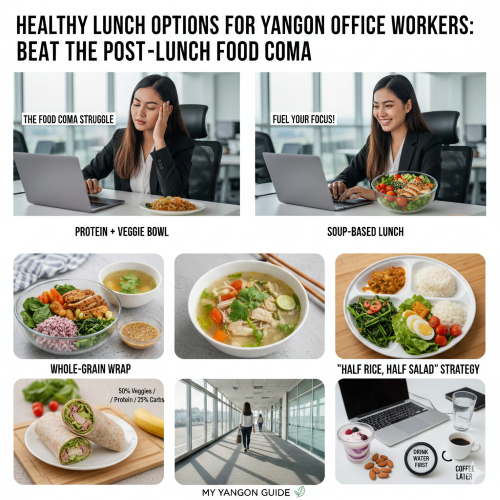
For those who regularly eat lunch at traditional Myanmar restaurants, it is still possible to avoid food coma by choosing your meal wisely. The key is to build a balanced plate. Instead of choosing only oily curries, it is better to include a vegetable dish such as leafy greens or cooked vegetables. Reducing the amount of rice and adding more vegetables can significantly lower the heavy, sleepy feeling that often comes after lunch.
On busy days, lighter options like sandwiches can also be a practical choice for office workers. The healthiest sandwich choices are those that include plenty of vegetables and avoid excessive mayonnaise or heavy sauces. A vegetable-rich sandwich can give you enough energy to continue your workday without forcing your body into “slow mode.”
If you are someone who loves noodles, you do not need to give them up completely. The problem is usually not the noodles themselves, but the way they are prepared—extra oil, strong seasoning, and large portions. Choosing clear-broth noodle soups or noodle salads with more vegetables and less oily dressing can help you enjoy your favorite meals while reducing the risk of food coma.
In addition to choosing healthier food options, the way you eat also matters. Eating too quickly, drinking sugary beverages with lunch, or skipping breakfast and overeating at lunch can make food coma worse. Taking a little more time to eat slowly allows your body to digest more comfortably and prevents overeating, which often leads to sluggishness.
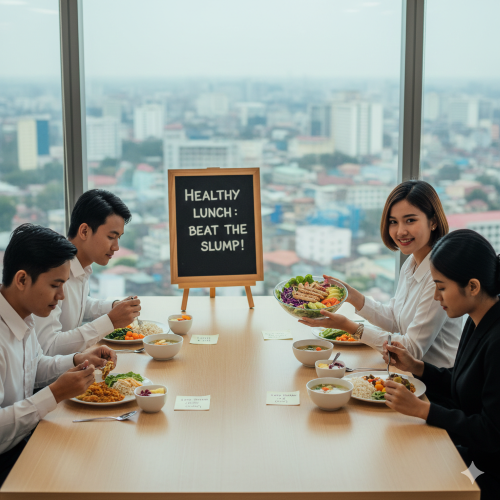
There are also small habits you can practice after lunch to stay more alert. Drinking water regularly throughout the day supports better energy levels and prevents fatigue caused by dehydration. Taking a short 10-minute walk after lunch can improve blood circulation and help you feel refreshed. For coffee drinkers, waiting about an hour after lunch before having coffee may be more effective than drinking it immediately.
In conclusion, food coma is a natural experience that many office workers face, but it can be reduced with simple and practical changes. Choosing balanced meals, reducing heavy portions, and improving eating habits can help you feel lighter, more focused, and more productive during the afternoon. Lunch should support your work performance—not slow you down. With the right healthy lunch options, you can enjoy your midday meal and still stay energized for the rest of the day, and MY Yangon hopes this article helps office workers make better choices for a healthier work routine.